
Our projects are the best illustration of how we work. Here you will find selected case studies from mechanical engineering, CAD and BIM, laboratory and measurement technology, and research – each with the initial situation, approach, solution and result. They show how we clarify requirements, make risks visible at an early stage and deliver software that stands up to our customers' day-to-day work. We only name our customers where this information is public.
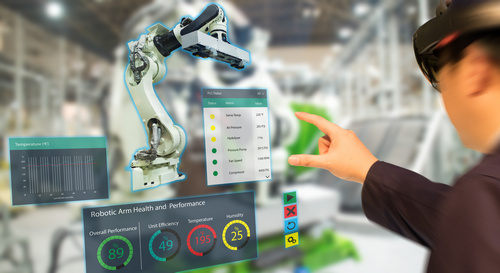
Control Software for a Production Machine
Industry: Mechanical engineering · Customer: internationally leading machine manufacturer · Duration: around one year · Team: six experienced developers
Initial situation: A complex production machine moves products through several modules on a transport unit. These modules process, mark and inspect the products with high precision. Lasers, scanners, cameras, label printers and chip programming units are involved – each device with its own interface and its own timing behaviour.
Challenge: Depending on the product type and production speed, each module has to carry out different functions, checks and sequences – reliably and in real time, without slowing down the machine's cycle.
Solution: We developed modular real-time software that runs on a dedicated real-time operating system:
- Each device has its own software module that adapts to the product type and speed.
- Communication runs via PLC (Beckhoff TwinCAT), TCP/IP and OPC UA.
- A central control module coordinates all processes and ensures that the components work together smoothly.
- A connected database manages configuration and production data.
- A clear user interface on the central terminal shows the status of each product, any errors and all settings.
Approach: We took on the entire development process – from requirements management and software architecture through implementation and commissioning to testing and quality assurance. We worked in an agile way with Scrum, with coordination via Jira and Confluence.
Result: A stable production process that is monitored end to end. The operator has a full overview at all times, and the modular architecture with a separate software module for each device keeps the system clear and extensible.
Technology: C#, C++, WPF, PLC (Beckhoff TwinCAT), OPC UA, TCP/IP, database, Azure DevOps, Jira, Confluence, Scrum

Modernising an AutoCAD Add-on for Civil Engineering
Industry: CAD / civil engineering · Customer: large software company (CAD provider)
Initial situation: An add-on for AutoCAD and AutoCAD Civil that had evolved over more than twelve years, with several hundred thousand lines of code in C++, COM, MFC and ObjectARX. Every new AutoCAD version entailed considerable migration effort.
Challenge: A port of this scale is an investment. The customer needed a sound basis for decision-making before approving it.
Approach:
- Feasibility study: We analysed the architecture and code and planned the route to the AutoCAD .NET API.
- Cost-effectiveness analysis: This showed how the effort with C++ would develop over the years and from what point porting to a modern language would pay off.
- Porting: The user interface with main and context menus, ribbon, properties palette, commands and dialogs, as well as the CAD core with entities, reactors and Xdata – to C# and the AutoCAD .NET API, additionally running in BricsCAD.
- Training: In a three-day training course, we prepared the customer's development team for the AutoCAD .NET API with C#. We had previously trained the team in ObjectARX and C++.
Result: The code already became considerably shorter and simpler during the porting process. The customer's development team is prepared for further development in C# and the AutoCAD .NET API, and the add-on also runs in BricsCAD.
Technology: AutoCAD, AutoCAD Civil, BricsCAD, ObjectARX, AutoCAD .NET API, C#, C++, MFC, COM, UML
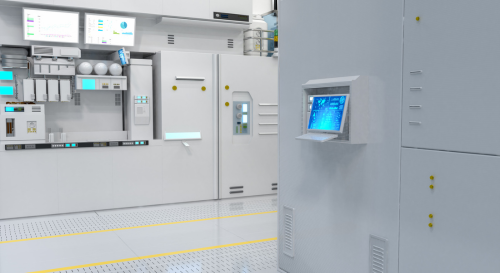
Revit Add-in for Exporting Laboratory Project Data
Industry: Laboratory technology / BIM · Customer: world-leading provider of laboratory technology
Initial situation: Laboratories are planned as Revit projects. Sales and planning need specific data from these projects – such as families and categories of special laboratory equipment – often from many projects at once.
Challenge: The data had to be available in different formats and structures, depending on which system or customer processes it further.
Solution: A custom Revit add-in analyses the layout and structure of the laboratories and exports precisely the required types:
- Flexible formats: Output as XML, JSON, PDF and other formats.
- Customisable data structure: The structure of the XML and JSON files can be adapted to the customer's requirements.
- Automation: Processes individual open RVT files as well as entire directories with subfolders – for individual projects and large data sets.
- Sales: Together with a simulator, customer requirements for laboratory planning can be defined, visualised and presented.
Result: Coordination between sales, planning and customers has become much simpler, and the entire sales and planning process more efficient.
Technology: Revit API, C#, WPF

Modernising Measuring Instrument Software: from Delphi to C#
Industry: Measurement technology · Customer: measuring instrument manufacturer · Team: ten people
Initial situation: In-house Delphi software that had been in use for decades was to be modernised and ported from Delphi to a modern technology.
Challenge: Before development could begin, the question was which technologies were the right ones and how the customer's own team could make the transition.
Approach:
- Consulting and planning: We weighed the goals against the possibilities of new technologies.
- Prototypes: These showed what possible solutions could look like, so that the customer could make the decision together with us.
- On-site training: The customer's entire team was introduced to the new technologies.
- Agile porting: The software is being ported to C# and WPF by a project team of ten people.
Result: The new software is already in internal use at the customer and has won over measurement technicians and sales staff alike. Once the work is complete, it will be available to all end customers.
Technology: C#, WPF, Delphi, MariaDB, Entity Framework, Scrum, Jira, Git

Software for a Digital PCR Readout Device
Industry: Laboratory and medical technology · Framework: BMBF (German Federal Ministry of Education and Research) joint project FREEDOM (FKZ 13N15287), five project partners, three-year term from February 2021
Initial situation: A novel device is designed to examine samples for specific DNA sequences faster, more easily and with greater complexity – for example blood samples for cancer DNA, or foods such as maize for genetically modified components.
Challenge: Device control, image acquisition and scientific analysis had to be brought together in one application – coordinated between a research foundation, a university and three industrial companies.
Our part: In the subproject ‘Design and Implementation of the Software Architecture’, Cadida was responsible for:
- Software architecture, data models and interfaces
- User interface as well as camera and LED control
- Image acquisition, image analysis, data analysis and presentation of results
- User stories with automated tests that safeguard the requirements in detail
Result: Software that combines device control, image processing and analysis in a single application – developed within the consortium and verifiably safeguarded by automated tests.
Technology: C#, WPF, Entity Framework, OpenCV, Scrum, Jira, Git
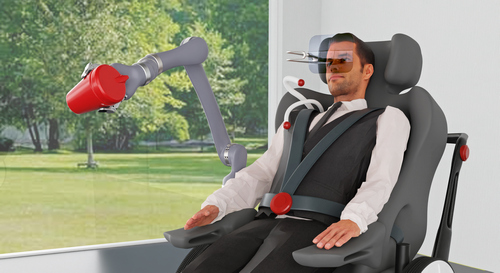
HIRAC: AI Assistance System for Wheelchairs
Industry: Research / robotics · Framework: funded by the Central Innovation Programme for SMEs (ZIM), together with Offenburg University of Applied Sciences
Initial situation: People with full-body paralysis and patients with locked-in syndrome cannot carry out even simple actions such as picking up a glass of water on their own. Voice-controlled devices are of little help because their ability to speak is limited.
Challenge: The system needs to work with commercially available wheelchairs, robotic arms, grippers and eye-tracking glasses from various manufacturers and be able to control them.
Solution: HIRAC (Hardware Independent Robotic Assistance Controller) is hardware-independent middleware for robotic grasping tasks:
- An AI brings together eye-tracking control, image processing, sensor feedback and object manipulation.
- The overall system combines AI, eye-tracking control of the wheelchair, a gripper arm mounted on the wheelchair and voice output.
Cadida is responsible for project management and software development, together with Offenburg University of Applied Sciences.
Goal: Those affected should be able to manage everyday tasks independently, while care staff are relieved of some of their workload.
Technology: Python, ROS2, Deep Learning, Reinforcement Learning, Linux, web interface
What Our Projects Have in Common
- Clarity before the first line of code: Feasibility studies, prototypes and cost-effectiveness analyses make risks visible at an early stage.
- Agile and transparent: We develop in short iterations with Scrum – you regularly see the current status and help steer the project.
- Quality from the outset: Automated tests and quality assurance accompany every project.
- Knowledge stays with you: On request, we train your team so that it can develop the software further itself.
Your Project
Facing a similar task? You will find further examples in our projects and references. You can find out how working with us works under Collaboration. Please feel free to contact us – we will be happy to advise you without obligation: Get in touch.
 kununu