

Two intensive days at Automatica 2025 in Munich are behind us – full of innovations, inspiring conversations and valuable insights into the future of automation and robotics.
This year Automatica was all about robots that grip and understand their environment – a decisive step in supporting industry.
The aim is to close process gaps in order to work with machines faster, more flexibly and more cost-efficiently. In view of the high cost pressure in Germany, automation is essential – the key here is to rely on innovation.
Here is an insight into our impressions, thoughts and conversations from Automatica:
AI and humanoid robots
Exciting developments in the field of artificial intelligence were shown at the fair: semantic understanding of the environment by robots that can answer questions, e.g. "Have you seen any leaks in the factory?" - data and models are indispensable here.
Humanoid robots will play a central role in the coming decades.
Companies should start now – waiting too long for a perfect AI could be risky. While Germany is mostly still hesitating, more companies in the USA and Asia are investing in these technologies.
Challenges in AI implementation
A key issue is the so-called black-box problem: how can we make the limits of AI visible? Boundary models help to maintain control and manage risks.
How robotics is changing the world of work
Robots are fundamentally changing our world of work. Users get used to them and demand further automation.
The way forward
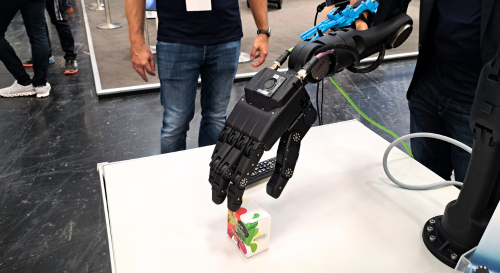
We must lay the foundations now and continue to improve them with AI. Alternatives such as human-like gripper arms are developing rapidly.
We were able to further expand our network of hardware manufacturers in many areas. This is of great interest to us, as we have been developing software solutions for decades that have been used, for example, for crash tests.
Which industries are most strongly represented as users?
By far the automotive industry leads, followed by mechanical engineering, electrical engineering and plastics manufacturing. Among others, we support precisely these industries and also look after newcomers to the industry individually.
Conclusion
Creativity and courage are needed to master the challenges of the future. Who dares wins.
The fair showed us once again: the industrial future is connected, smart and full of possibilities. A particular highlight was experiencing the latest developments in AI, image processing and software development live.
We are taking away lots of ideas and are already looking forward to developing them further together.
Image credit: Cadida Software
 kununu